On the evening of January 8, 2025, a fire broke out in the 2300 block of North Solar Drive, in the wedge of hillside that sits between Runyon Canyon and Wattles Park. Within an hour it had burned about 40 acres. By the next morning it was out, no structures lost, evacuation orders lifted street by street. If you measured the Sunset Fire only by its footprint, you'd call it a footnote in a city that has seen far worse.
You'd also be wrong about how long it would take this one small hillside to recover.
Nineteen months later, the Los Angeles Department of Recreation and Parks still lists an active restoration project at Wattles Garden Park, funded by $350,000 in Measure A RESTORE money, dedicated specifically to rebuilding what the fire took out: the wooden gates and arch gateway at the park's entrances, the irrigation and plantings the flames and runoff damaged, and erosion controls to keep debris and mudflow off the trails below. That's an unusually long tail for a 40-acre brush fire, and the reason has less to do with how much burned than with what burned. This particular park is not one piece of ground with one manager and one reopening date. It's three, and the fire hit the seams between them.
A Fire That Barely Touched the Map, and an Evacuation Zone That Covered Half the Hills
The disconnect is worth sitting with for a second, because it explains a lot about why recovery here has been slow and uneven rather than quick and total.
The Sunset Fire burned roughly 40 acres. The mandatory evacuation zone that went with it stretched from Laurel Canyon Boulevard on the west to the 101 Freeway on the east, and from Mulholland Drive down to Hollywood Boulevard. That's not a proportional response to a 40-acre brush fire. It's what happens when a fire ignites on a red-flag wind night in a canyon dense with homes, and fire crews have to plan for where it could go rather than where it is. Hollywood High School opened as an evacuation center. Landmarks well outside the actual burn area, including the Hollywood Bowl and the Dolby Theatre, sat inside the warning perimeter simply because of proximity.
The point isn't that the neighborhood overreacted. It's that a lot of Hollywood Hills residents who were never within a mile of actual flame still associate that January night with Wattles Park, because that's the name attached to where the fire started. That association is accurate. What most people don't know is what happened to the park itself once the smoke cleared, because the park isn't one thing that either reopened or didn't.
What "Wattles Garden Park" Actually Contains
Say the name to most people who live near Hollywood Hills and they picture one of three things: a historic mansion, a community garden, or the back way into Runyon Canyon. All three are correct, and all three are run differently.
The southern end, fronting Hollywood Boulevard, holds the Wattles Mansion and its formal gardens, a Mission Revival house built in 1907 for Omaha banker Gurdon Wattles. The architects were Myron Hunt and Elmer Grey, the same pair who later designed the Beverly Hills Hotel and the Rose Bowl. The mansion has been a Los Angeles Historic-Cultural Monument since 1993.
North of the mansion's front lawn sits Wattles Farm, a members-only organic community garden that has operated on roughly four acres of the old estate's orchard land since 1975. It is run by an independent nonprofit, Wattles Farm and Neighborhood Gardeners, Inc., in partnership with the city, not by Recreation and Parks directly.
And past both of those, the land climbs into an undeveloped canyon of coastal sage scrub and chaparral that connects, via a marked but rough trail, into the Runyon Canyon trail system to the east and the Trebek Open Space to the west. This is the part that actually burned.
Three names, three governing bodies, three different recovery clocks. That's the part the fire made visible.
Two Closures, Not One
Here's where it gets concrete. As of AllTrails' most recent status check on the Wattles Garden Park Loop, dated July 19, 2026, the trail-tracking site lists two separate, unrelated closures affecting this same stretch of hillside: a short-term closure of Wattles Garden Park itself, and a partial closure of Runyon Canyon's West Trail that has been in place since March 2026. Different agencies, different timelines, and no guarantee that one reopening tells you anything about the other.
That second closure, the Runyon West Trail one, has its own story, and it's one we've covered separately. But the Wattles side matters on its own terms, because the loop hikers know as the Wattles Garden Park Loop specifically uses a connector marked "W9" that drops off Runyon's western ridge, descends steeply past a transmission tower, and pops out onto Wattles Drive near where it becomes Curson Avenue. If you're used to treating that connector as one continuous walk between two parks, the current reality is two overlapping problems in the same two miles, on two different repair schedules.
A single closed gate on a shared trail can mean two entirely different things depending on which side of it burned.
The Restoration Project Nobody Announced
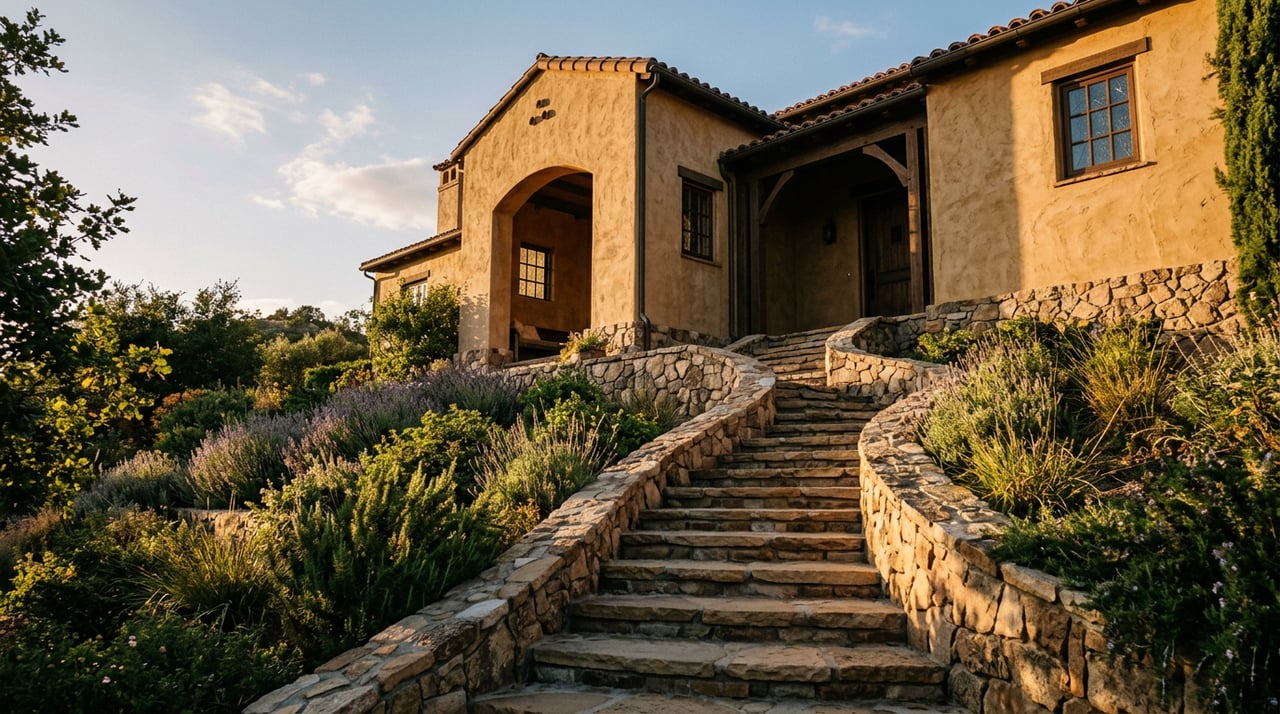
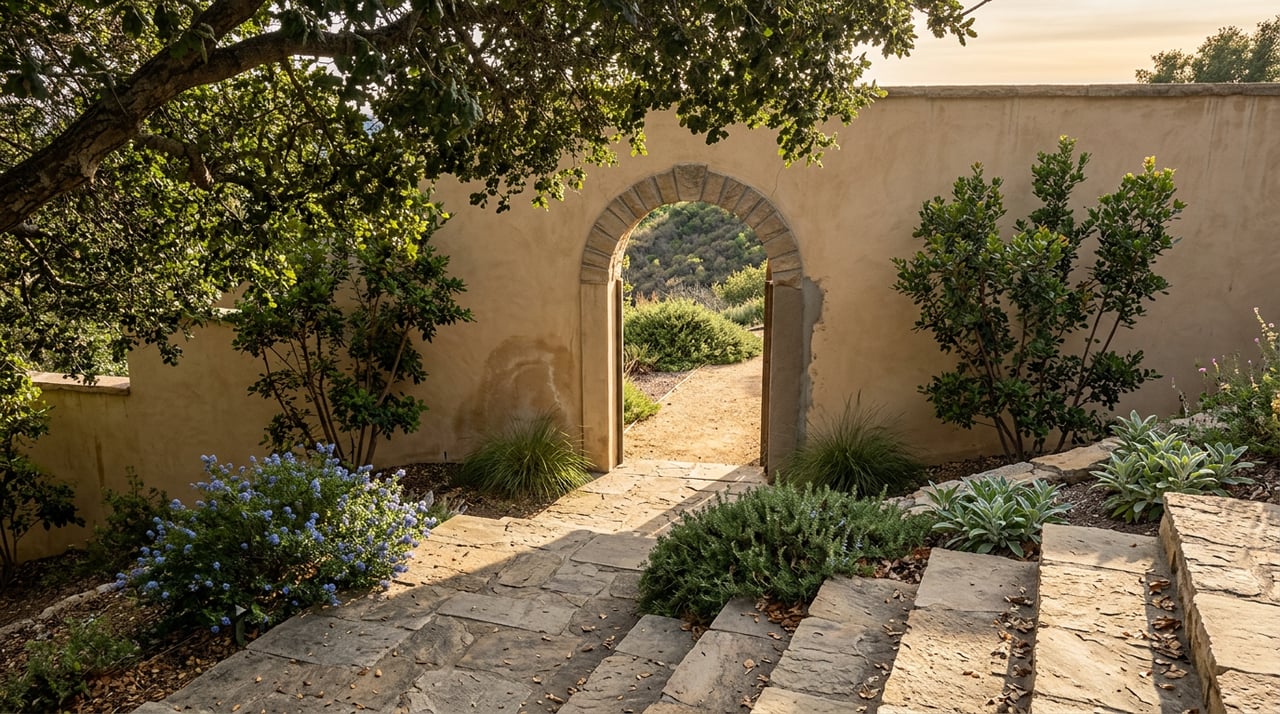
The city's $350,000 project isn't a demolition or a rebuild from scratch. It's targeted repair: reconstructing the wooden gates and arch gateway at park entrances, restoring irrigation lines and plantings that fire and subsequent runoff damaged, and installing erosion controls to keep mud and debris off the lower trails during rain. None of that is glamorous work, and none of it comes with a press conference. It shows up as a line item on a city parks page, not a ribbon-cutting.
That's worth knowing if you've been wondering why the park doesn't feel fully back to normal. The mansion's formal gardens are not what's being rebuilt right now. The gates are. The difference matters if you're trying to guess when you'll be able to walk the full loop again versus when you'll be able to see the mansion's front lawn, because those are two different questions with two different answers.
The Farm Never Stopped
While the trail infrastructure was under repair, Wattles Farm kept running on its own rules, because it always has. Membership requires living within five miles of the garden and completing three consecutive monthly Clean-Up Weekends, held the second weekend of each month, before your name goes on the waiting list for a plot. Plots open up irregularly. The garden's current point of contact, listed as its Wattles Ambassador, is Toby Leaman.
None of that changed because of a fire on the hillside above it. The farm's clean-up weekends, its board elections, its plot waitlist, all of it sits outside the city's restoration timeline entirely. If you've been holding off on applying because you assumed the whole park was closed, that assumption was doing more work than the actual facts support.
What This Means If You're Walking the Hills Right Now
If you live in the neighborhood and you're trying to figure out what you can actually do at Wattles this month, the honest answer depends on which of the three Wattles you mean:
- The mansion and formal gardens are closed for weddings and private events, though the property is still available for film and TV shoots, a status that's been in place for a while and isn't tied to the fire.
- The community garden is operating on its normal 1975-era schedule. If you want a plot, the path in starts with showing up to a Clean-Up Weekend, not filling out a form and waiting.
- The canyon side, including the loop connecting to Runyon's West Trail, is subject to a shifting patchwork of city repair work and a separate, unrelated trail closure to the east. Check current status before you plan a loop hike rather than assuming last month's map still holds.
The larger lesson, if there is one, is that a single name on a park sign can flatten three very different institutions into one mental category, and a fire is exactly the kind of event that exposes where those seams actually are. Wattles didn't reopen or stay closed. Pieces of it did both, on their own schedules, and that's likely to keep being true for a while yet.
If you're already living in the Hollywood Hills and keeping half an eye on how the neighborhood is recovering from that January night, you know this stretch of hillside better than any national outlet ever will. For everything else about buying, selling, or simply understanding what a property near this corridor is actually worth in today's market, Anton Ismailyan is a local resource worth having in your corner.