Ask most buyers why Little Holmby listings are so rare and you'll get the same answer: it's a small, desirable pocket of Westwood, and small desirable pockets don't turn over often. That explanation isn't wrong. It's also not the whole story, and treating it as the whole story means missing the one variable that actually determines when a longtime owner decides to sell.
The bigger driver is a tax mechanism that has nothing to do with how much anyone loves their street. It has to do with what selling costs, in a very specific, recurring, annual sense, regardless of what the market is willing to pay.
What Everyone Assumes, and What's Actually True
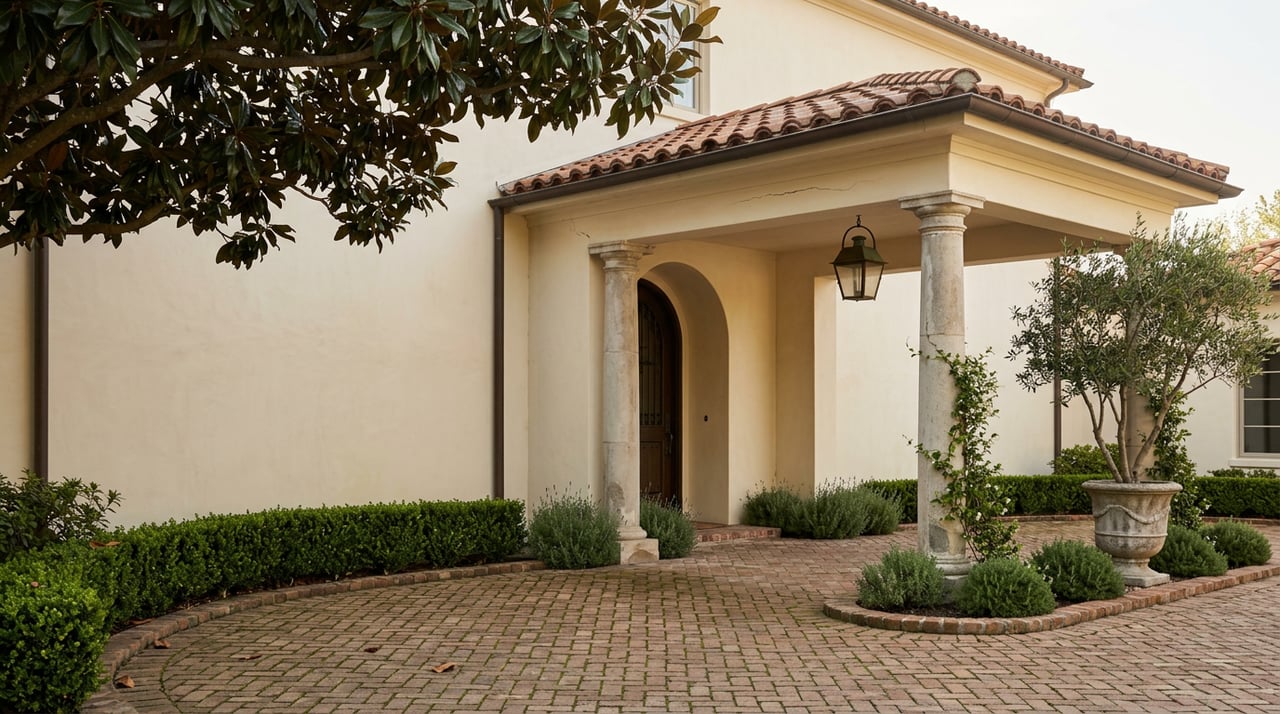
Little Holmby sits between UCLA and the Los Angeles Country Club, and most of its housing stock dates to between 1920 and 1950, with Colonial and Spanish Colonial Revival as the dominant architectural styles. That vintage matters for reasons beyond curb appeal. Homes built in that window are more likely to have passed through very few owners, often just one family across multiple decades. Long tenure is baked into the neighborhood's bones.
Long tenure under California's property tax system means something specific. Proposition 13 caps how much a home's assessed value can rise each year, regardless of what's happening to market prices. An owner who bought thirty or forty years ago can be paying property tax on an assessed value that is a small fraction of what the home would sell for today. That gap doesn't shrink. It compounds every year the owner stays put.
Sell that home and buy anywhere else in California, and the clock resets. The new purchase gets assessed at full market value, and the tax bill jumps to match it. For an owner sitting on decades of accumulated gap between assessed value and market value, that reset isn't a minor inconvenience. It's a permanent increase to an annual bill, for as long as they own the next place.
What Staying Put Actually Saves
The California Board of Equalization publishes a plain example of the math involved, and it's worth walking through because the numbers make the incentive concrete.
A home with a $1,000,000 sale price and a Factored Base Year Value of $325,000, taxed at roughly 1.25 percent, generates an annual property tax bill near $12,500 if the owner starts fresh at full market value. Keep the old $325,000 basis instead, and the bill drops to about $4,063 a year on the same replacement home.
That's not a one-time difference. It's over $8,000 a year, every year, for as long as the owner keeps the property tax portability they'd otherwise lose. Multiply that across a decade of ownership and the number that looked like a rounding error on a closing statement becomes a six-figure reason to never list the house at all.
This is why "the market is hot, why won't they sell" is the wrong question for a lot of Little Holmby owners. The market being hot is exactly what makes staying expensive to leave.
The Trap Prop 19 Only Half Removed
Before April 2021, an owner 55 or older who wanted to keep their low tax basis had two ways to do it, and both were narrow. They had to move within the same county, or to one of ten counties statewide that agreed to accept an incoming transfer, and the replacement home had to cost the same or less than the one they sold. Move outside that list, or trade up in price, and the discount disappeared entirely.
Proposition 19 removed the geography problem. As of April 1, 2021, a qualifying owner can carry their tax basis to a replacement home anywhere in California, not just a reciprocal county, and they're no longer capped at buying at or below their old home's value. According to the Los Angeles County Assessor's office, the exclusion can be claimed up to three times over an owner's lifetime, and it's available to homeowners 55 or older, severely disabled owners, and victims of wildfire or other declared disasters.
Trade up in price and the math still works, just with an adjustment. The Board of Equalization's guidance sets the replacement home's assessed value at the old basis plus the difference between the two sale prices, with a small percentage cushion depending on timing: full value if the replacement is bought before the original sells, a 5 percent cushion if bought within a year after, and 10 percent within two years. As of mid-2026, none of these mechanics have changed since they took effect. It's the same statewide portability, the same three-transfer limit, and the same claim process that's been in place for five years now.
What Prop 19 didn't touch is the underlying incentive for owners who aren't 55, aren't disabled, and haven't lost a home to a disaster. For that group, the reset is still automatic and still permanent. And even for owners who do qualify, portability only helps once they've decided to move. It doesn't create a reason to move in the first place.
Why This Shows Up So Clearly in Little Holmby
A neighborhood built out almost entirely in a thirty-year window a century ago is a neighborhood where a large share of owners are old enough to have owned the home since well before it was worth what it's worth now. That's a structural feature of Little Holmby's architecture, not a coincidence. It also means a meaningful share of current owners are exactly the demographic Prop 19 was written for: people old enough to qualify for the portability transfer, sitting on decades of assessed-value gap, who now have a path to sell without losing the tax benefit they've built up.
That's the mechanism worth watching if you're house-hunting here. It doesn't create more inventory today. It creates a population of owners for whom the single biggest financial argument against selling has been partially defused, which changes the odds that a given home eventually comes to market, especially as owners age into decisions about downsizing or relocating near family.
A Wrinkle Still Playing Out in 2026
Prop 19's other half, the rule governing inherited homes, has drawn more political pushback than the portability provision. A 2026 ballot effort to roll back that inheritance rule failed to qualify for the November ballot, falling short with roughly 560,000 of the 874,641 signatures required, and its backers have said they're aiming for 2028 instead. A separate proposal in the state legislature addressing the same issue hasn't become law. Neither effort touches the senior transfer rules described above, so the portability math a Little Holmby owner would use to sell and move stays exactly as it's been since 2021, at least for now.
What This Means If You're Actually Looking Here
If you're comparing Little Holmby against other Westside options, the practical takeaway isn't to wait for a wave of listings. It's to read a listing differently when one appears. A home that's changed hands recently tells you less about the current owner's tax situation. A home held by the same family since the 1960s or 1970s tells you the seller has likely already run the Prop 19 math, and that the sale is probably driven by a life change rather than a market read, which can affect how firm they are on price.
It also means the pricing conversation around a long-held Little Holmby home isn't purely about comparable sales. An owner who has weighed the tax consequences for years before finally listing has already priced in more certainty than someone who bought five years ago and is testing the market. That's worth factoring into an offer strategy, and it's a different conversation than the one buyers have in neighborhoods where turnover is routine. If you want a closer look at how that plays out against a comparable Westside option, our comparison of Little Holmby and Westwood Hills is a useful next read.
Frequently Asked Questions
Does Prop 19 help an owner who isn't 55 yet? No. Outside of severe disability or a declared wildfire or disaster, the portability benefit is limited to owners 55 and older. A younger owner who sells still faces a full reassessment on whatever they buy next.
Can an owner use this to buy a more expensive home, not just downsize? Yes. The adjustment formula lets a qualifying owner buy up in price and still carry over most of their old tax basis, with the difference in sale prices added to the transferred value.
Does any of this change what buyers should do differently? It changes what to watch for. A long-held home coming to market is often a sign the owner has already resolved the tax question, which tends to mean a more decisive seller. Understanding that dynamic is worth as much as the comparable sales data most buyers lean on first, and it's the kind of detail worth discussing before you write an offer in a neighborhood where listings are this infrequent. Our Little Holmby market guide covers the rest of what typically shows up in escrow here.
If you're weighing a move into Little Holmby, or you're an owner trying to figure out what your own tax basis would look like on a sale, Anton Ismailyan can walk through the numbers with you directly. Start with a home valuation or reach out to talk through your specific situation before you decide whether this is the year to list.